
CO2 to Synthetic Fuels
CO₂ Conversion via e-RWGS.
SYPOX e-RWGS enables electrified catalytic conversion of CO₂ and renewable H₂ into syngas tailored for downstream fuel synthesis. The resulting syngas is well suited for Fischer–Tropsch pathways, including e-fuels and e-SAF. As an electrified front-end for carbon utilization, e-RWGS creates a practical route from captured CO₂ to synthetic fuels without fired combustion. It also supports tighter process integration by enabling direct reforming of light hydrocarbon fractions from FT recycle streams.
SYPOX e-RWGS Products for CO2 Conversion.
SYPOX S-200
Decentralized e-RWGS Unit
SYPOX SY-ZEHN-S
Industrial Scale e-RWGS
SYPOX offers e-RWGS solutions across scales — from site-level installations for decentralized applications (S-200) to 10 MW electrified RWGS modules (SY-ZEHN-S) for larger regional or industrial projects.
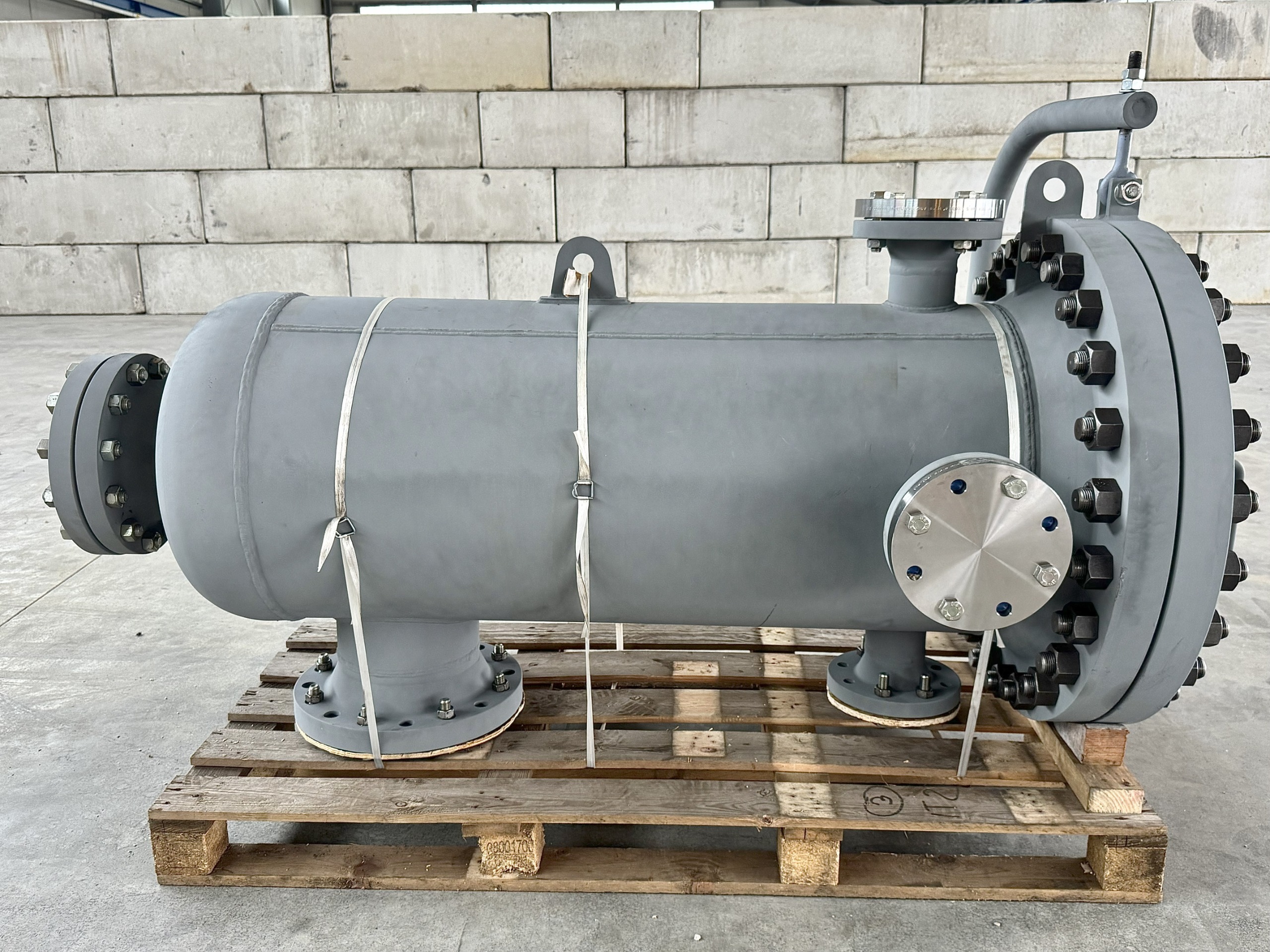
Built for synthetic fuel pathways.
For synthetic fuels, the key role of e-RWGS is to generate syngas with the composition needed for downstream conversion. SYPOX enables direct reforming of light hydrocarbon fractions from FT recycle streams, supporting tighter integration and improved carbon utilization in synthetic fuel plants. This makes it a strong fit for Fischer–Tropsch projects and other pathways where CO₂ and renewable H₂ are converted into liquid fuels.
Why electrified RWGS with SYPOX?
SYPOX combines direct electric heating and catalysis in one compact reactor platform for high-temperature CO₂ conversion.
- Direct resistive heating in contact with the catalyst
- Multi-mode heat transfer: radiation, convection and conduction
- Up to 95% energy efficiency from power input to reaction zone
- Ultra-high energy density: up to 10 MW/m³ inside the catalytic bed
- Reactor outlet temperatures up to 1100 °C and 50 bar
- Negligible pressure drop (< 0.5 bar)
- No radial temperature gradients, ensuring uniform reaction conditions
- Operation above 400 V simplifies power supply integration